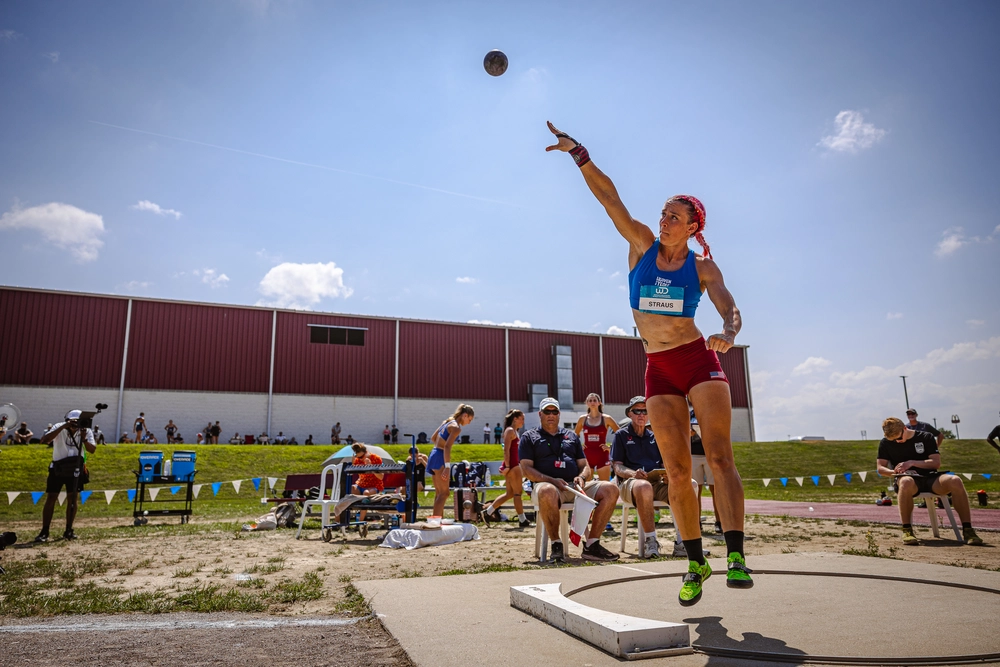
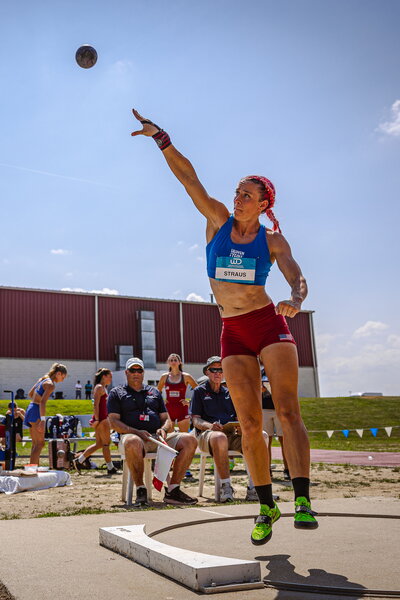
Katie Straus crossed the finish line of the 1,500 meters exhausted.
After two days and nine previous events of sprinting, jumping, throwing, and vaulting, the final race of the decathlon is less about speed than endurance — pushing forward even as the body begins to break down. By that point, Straus said, the hardest part isn’t just physical.
“The worst part about the 1,500 is that it’s slow enough that you can think,” she said. “You start thinking about how much everything hurts. Then, you realize you still have two and three-quarters laps to go.”
In many ways, this moment — pushing through exhaustion with no real choice but to keep going — mirrors the reality of competing in the women’s decathlon itself, where athletes are not only tested across 10 events, but are also helping push the sport toward recognition.
At the 2025 Women’s Decathlon World Championships — currently the highest level of competition for the event — Straus earned the silver medal, delivering one of the strongest performances of her career. A PhD student in the Department of Climate, Meteorology & Atmospheric Sciences at the University of Illinois Urbana-Champaign, she balances that level of competition with graduate research, academic responsibilities, and a training schedule largely built on her own, making the moment even more meaningful as she competed in front of family and friends in her home state of Ohio.
The result was both validating and emotional. But as meaningful as that moment was, it may ultimately pale in comparison to what Straus and other athletes are working toward: the day the women’s decathlon is recognized on the Olympic stage.
Learn more about the women's decathlon's struggle for international recognition